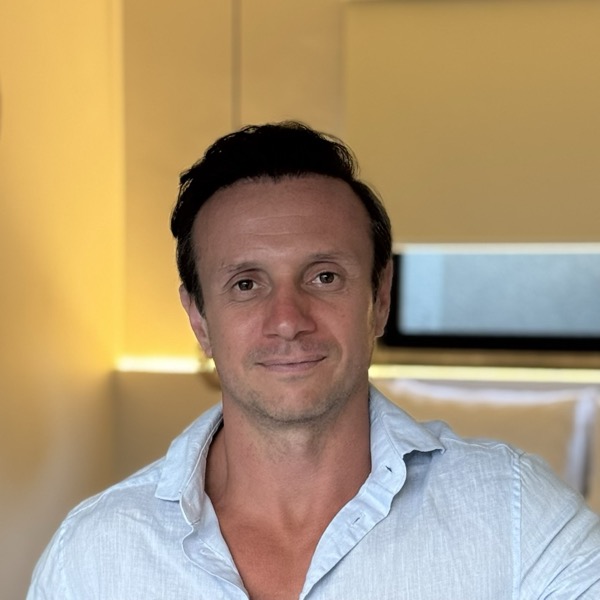
In June this year, I moved back to the UK after living in Southeast Asia for the last 9 years. Two of those years were in Thailand, and 7, yes, 7, were in Bali.
I loved it. Especially the lifestyle. I met great people, amazing founders and interesting entrepreneurs spanning every kind of business you can imagine.
But there was also a part of me that knew I'd outgrown the place on a professional level.
The time difference between Bali and London is 7–8 hours. Between Bali and LA, it's 15–16 hours. And between Bali and New York, it's 11–12.
Apart from the 2 years I spent as co-founder of an AI consultancy based in Sydney, all my businesses have worked with US and UK clients.
I knew moving back was what I wanted, so in June this year, that's what I did.
The problem was I'd been in Asia for 10 years. Aside from past clients from my previous companies, I had no network or connections in the UK/US. I hadn't been prioritising my personal brand, even though I'd built 3 companies using social media and outreach to do this.
So when I knew I was starting something new, I also knew I was pretty much starting from ground zero.
HERE’S WHAT’S COMING
In this newsletter, I'll show you how I generated 200 leads on LinkedIn in 102 days for a new offer in a new market, with zero referrals or network.
I see so many founders struggling to get leads and clients for their businesses using social media.
I don't know what everyone does, but after speaking with hundreds of founders in the last 10 years, I do know this. Most people overcomplicate things. Even the smartest of founders.
Right now, this is a bigger problem than it used to be.
I know founders running 17-step automated workflows just to send a DM to someone.
I met with a founder recently who'd built AI agents to monitor what his potential clients were doing online. Where they posted. What they were saying. Then he showed me how he tracked this across multiple channels.
It sounded great.
When I asked what he'd done with this, he said nothing. He'd got caught up in building something to watch for leads rather than actually doing anything with it.
I know this would have felt like progress for him because I’ve been there too.
But it's fake progress. I've yet to meet a founder who built a business on fake progress.
What I didn’t do
Before I show you what worked, I want to show you what I didn't do.
Many founders who use social media approach it like full-time content creators rather than the founders they actually are. They waste so much time trying to post content that goes viral or chasing likes and comments.
They get caught up in complaining about algorithm changes, arguing with people or building the most complex content system in the history of content systems.
Your goal as a founder is to grow your business. To grow a business, you need sales, clients and revenue.
Without these, you have a very very very expensive, stressful and time-consuming hobby.
Posting content is at the core of what I do for myself. My mission is also to help founders make an impact and grow their businesses by writing online.
Content compounds over time, but that doesn't mean you have to wait for clients to find you or for your posts to be found. When you use content strategically, it acts as social proof (more on this below).
So what I didn't do back in June was sit back and wait for my posts to be found, or wait for clients to magically show up.
Here are the 7 micro moves I made.
1/ Clarity
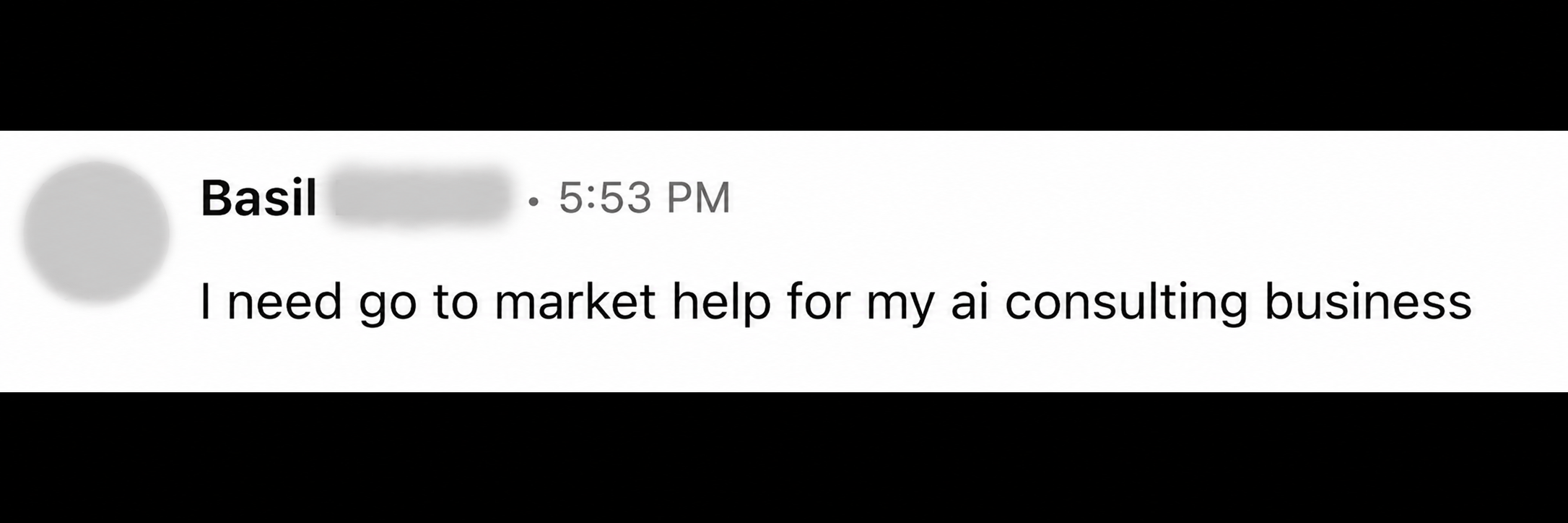
I got clear on one problem. Back in June, that was helping AI consultancies with their go-to-market strategy. Most founder-led consultancies don't have this in place. Founders, especially consultants, are amazing at what they do, but the marketing and strategy behind the company don't usually exist.
It's why most build their companies on referrals and word of mouth, which is OK, until it isn't.
My background is in starting, building and scaling companies from the ground up without relying on a network, referrals or word of mouth. This is what I've done for 10 years across different industries.
2/ Found the companies
Now I knew the problem I was solving and who I was solving it for. The next step was to find suitable companies.
I created an ideal client profile, fed this into AI and had it research companies for me.
It came back with 750 companies in the UK and 3,000+ in the US. After some filtering and refining, I had a list of 1,500 suitable companies.
This was more than enough for me to get moving.
3/ Found the right people at the companies
I used AI to find the founders, CEOs and leadership team members at each one and return their LinkedIn profiles. I filtered heavily for patterns or traits within the companies. I wanted to rule out AI products and look specifically for AI services.
Now I had the profiles of every person I needed to speak with.
4/ Aligned my positioning with the people I could help
I made changes to my LinkedIn profile based on the people I was trying to help and the problem I was solving. (It's since changed. More on this below).
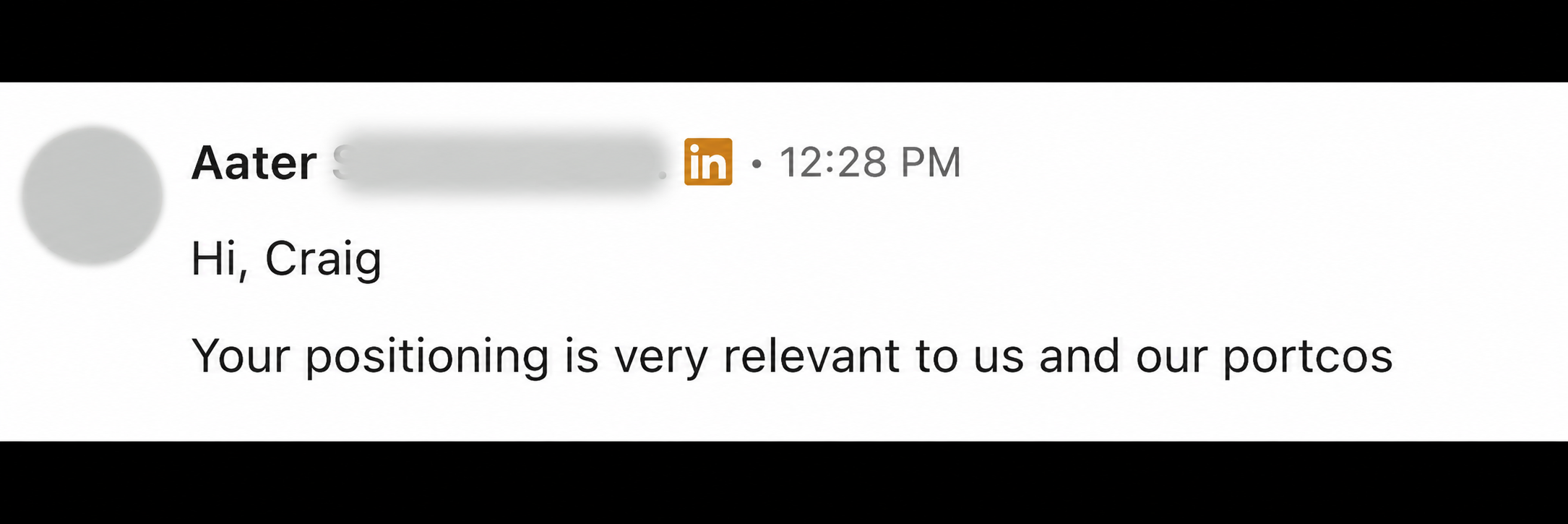
The goal was to make it obvious what I do, who I help and how I help. This was for two reasons. First, when someone sees a post, it has context.
Now when I add people on LinkedIn, they can see who I am and choose whether to connect. It's a filter. Being vague or having no positioning at all means anyone and everyone can come into my world. That's not my goal.
5/ Posted content
I knew I didn't want to waste time creating a complex writing system or content strategy. So I broke down what I knew my potential clients needed to see.
I posted about problems AI consultancies experience.
How to build a GTM strategy and why you need one.
How to get clients using social media (because you definitely need clients).
What I'm building, lessons I've learned, and mistakes I've made.
And I did all of this through my philosophy of “show what I know.” In other words, build in public and show you what I know, what I'm learning and why it matters.
6/ Added 20 people a day from my list
From the list I built, I would send 20–25 connection requests every day and tick these people off my list. This seems small and time-consuming.
And maybe it is for some people, but this is what makes LinkedIn great for growing your brand and business. You literally get to hand-pick who you want to work with and then connect with them.
You can't do this on other platforms in the same way you can on LinkedIn.
And yes, I know automations exist for this. But I don't suggest using these until you know your ideal client inside out. Do this manually to begin with.
7/ Sent DMs to every person who accepted my connection request
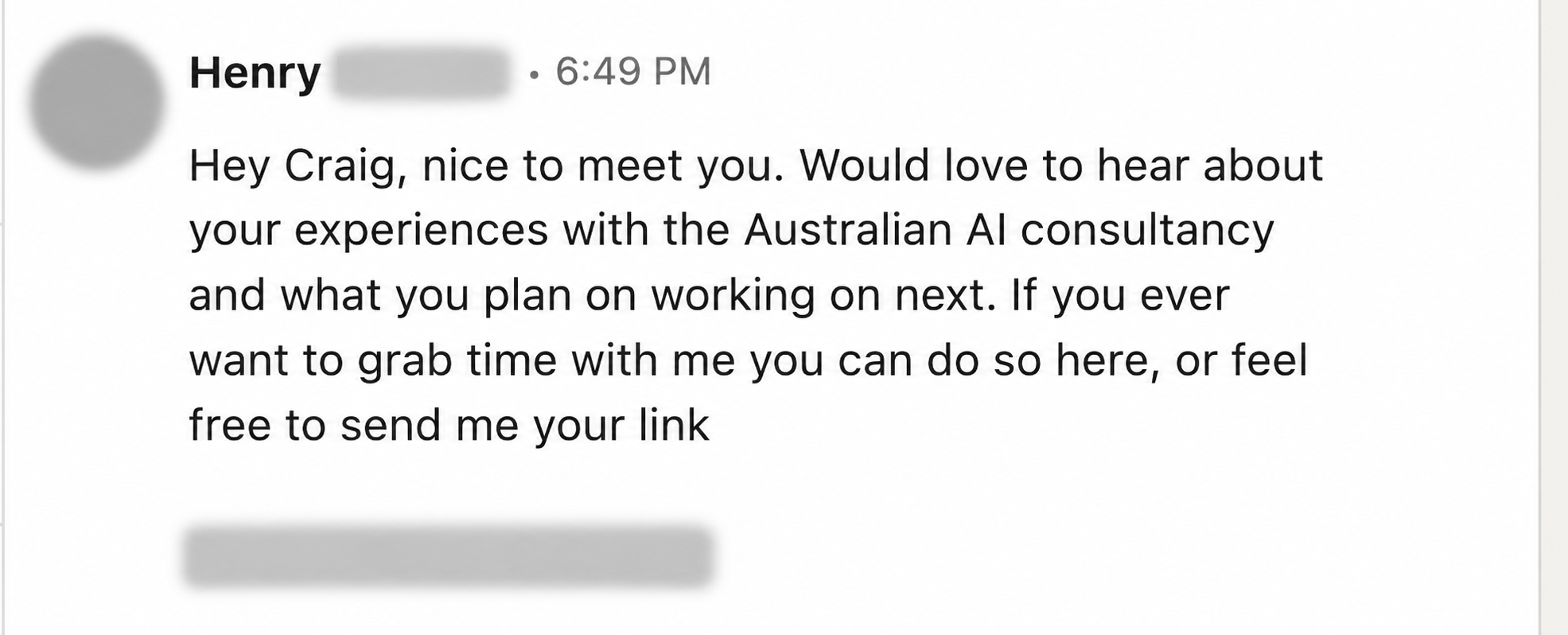
Every new connection that came into my world got a welcome DM from me.
I intentionally wrote welcome messages in the same way I'd speak to someone I was meeting for the first time.
Most of the people I connected with would offer to have a call with me in their reply to my first message. Some gave their booking link in their reply, and others asked me to send mine.
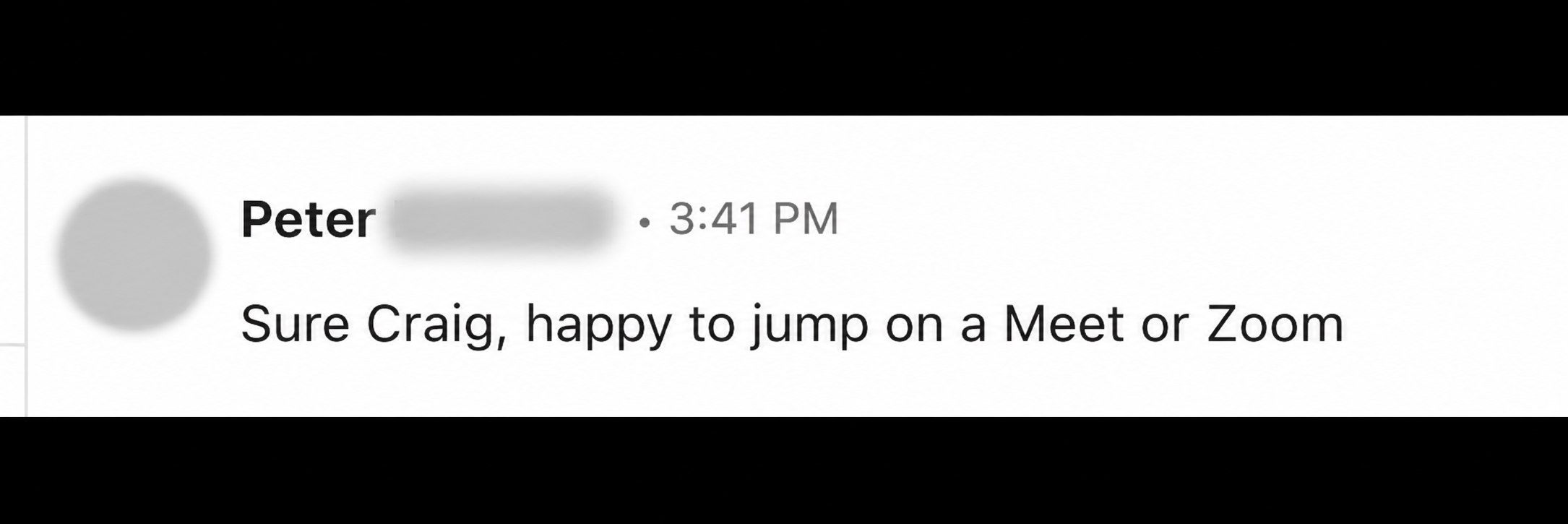
I never asked anyone to hop on a call or to pick their brain, or offered to send a Loom video they didn't ask for. And I definitely didn't send AI-generated messages.
Instead, I did this really weird thing. I was just me.
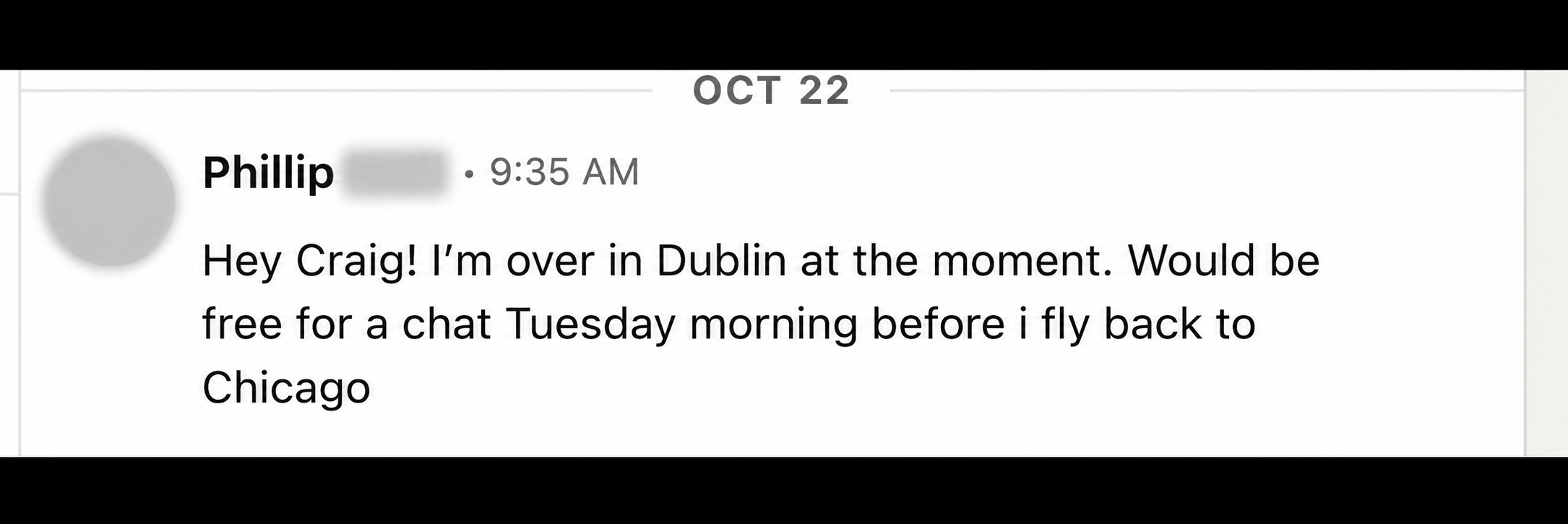
The DMs I sent that booked calls and eventually turned into clients were the tip of the iceberg. This is just the last part everyone sees. But this whole setup would have failed if the first 6 steps in this list were flawed or were not in place.
The whole process is connected. Each of these steps is part of the same system, rather than an isolated task or something to tick off.
This is a boring and simple process, but it's the exact system I followed every day for 102 days. And in that time, I generated 200 leads. Of those leads, 71 turned into sales calls.
What changed after 200 leads
Earlier, I mentioned that I started off helping AI consultancies with go-to-market strategies, but that's changed. It changed because, after speaking with so many founders in the last 4 months, it's clear that strategy isn't what's on their minds.
What's on their minds is more leads, clients and $$.
I still help with the strategy work. It's now part of the outcome I help them create.
Hope this was helpful.
See you next week
Craig
P.S. Want to work with me?
1/ My company, MimpFlow, works with B2B founders/small teams to help them attract their ideal clients with content and connection on LinkedIn.
We can build your entire system for you and run it. Or if you have the capacity, we can build it and you run it.
CRAIG’S LETTERS
Get the next letter.
Every Saturday, I send a 5-minute email with one practical strategy you can use in your business today.